The Role of Personalized Instruction in Online Tutoring Success
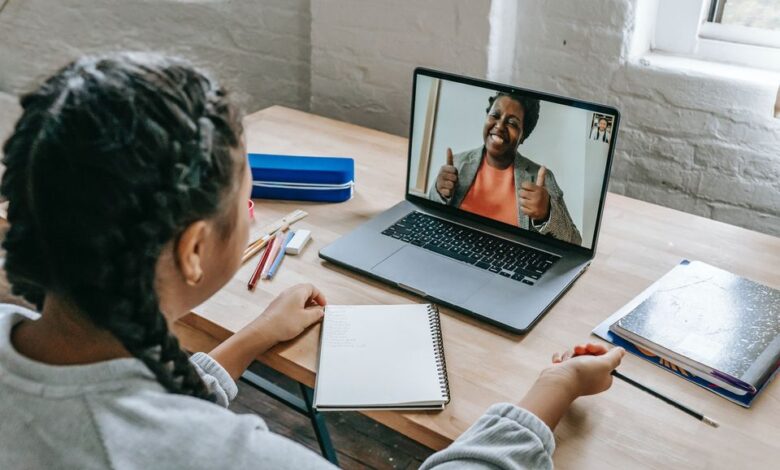
The global shift toward digital education has transformed how students access academic support. Millions of learners now utilize online tutoring platforms to supplement their traditional schooling, prepare for high-stakes examinations, or master specialized skills. However, the migration of educational content to a digital screen does not automatically guarantee positive academic outcomes. When online tutoring platforms replicate the rigid, one-size-fits-all model of a standard lecture hall, they frequently suffer from high student disengagement and minimal knowledge retention.
The true catalyst for student achievement in the digital space is personalized instruction. Personalized instruction is an educational approach that tailors the pace, teaching methodology, content delivery, and feedback mechanisms to the specific academic baseline, cognitive profile, and psychological needs of an individual learner. In a virtual environment, where the traditional physical cues of understanding are mediated by technology, customized learning strategies are essential to transform passive screen observation into active cognitive mastery.
The Limitations of Uniform Digital Education
Before examining the mechanics of customization, it is necessary to identify why standard, uniform approaches fail online. In a traditional physical classroom, a teacher can sweep their eyes across the room to detect physical confusion, distracted body language, or geometric posture shifts that indicate a drop in student attention.
In the digital sphere, these subtle behavioral indicators are severely minimized. If an online tutor delivers a generic, pre-written slide deck presentation to a group of students, the learning experience rapidly degrades due to several factors:
-
The Disconnection Trap: Without direct, customized interaction, students easily fall into a passive state, viewing the educational session as a video broadcast rather than an interactive academic workshop.
-
Unaddressed Cognitive Gaps: If a student lacks a foundational prerequisite concept, a uniform lecture will continue moving forward vertically, completely leaving the student behind and compounding their frustration.
-
Cognitive Under-Stimulation: Conversely, advanced learners forced to move through redundant explanations designed for the average speed of a group lose their intrinsic motivation, leading to boredom and behavioral disengagement.
Personalized instruction addresses these structural vulnerabilities by placing the individual learner at the absolute center of the educational framework.
Pillars of Successful Customization in Online Tutoring
An effective personalized digital tutoring architecture is built upon several foundational components that operate in continuous alignment throughout the learning relationship.
Micro-Level Diagnostic Assessments
True personalization cannot begin without an accurate mapping of the student’s current intellectual location. Rather than relying on sweeping, high-level placement tests that offer generalized score percentages, sophisticated online tutors utilize microscopic diagnostic diagnostics. These assessments evaluate exact micro-skills. For example, instead of labeling a student generally weak in mathematics, the diagnostic pinpointing isolates that the student understands basic fraction mechanics but fails when calculating uncommon denominators, allowing the tutor to build an incredibly targeted intervention roadmap.
Adaptable Curricular Sequencing
In a standard school curriculum, the calendar is fixed, and the level of student comprehension varies. A student has two weeks to learn a concept before the entire class takes an exam and moves to the next chapter, regardless of whether that individual achieved true mastery. Personalized online tutoring reverses this dynamic. Mastery becomes the fixed variable, while the time allocated to achieve it remains flexible. The curriculum expands, contracts, or shifts its trajectory in real-time based on the student’s daily cognitive output.
Tailored Pedagogical Mediums
Human beings absorb, process, and store information through diverse cognitive channels. A personalized tutoring framework matches the delivery medium to the student’s unique learning preferences. A lesson on physical mechanics can be approached through formal mathematical derivations, graphic animations, real-world case studies, or interactive whiteboards where the student actively models the vectors themselves. By varying the presentation, the tutor optimizes working memory efficiency and accelerates the long-term retention of complex data.
The Psychological Dimension: Building Self-Efficacy
Beyond the pure transmission of academic data, personalized instruction plays an indispensable role in reshaping a student’s academic self-concept. Many individuals seek out private tutoring because they have experienced systemic failure or prolonged confusion in traditional educational settings. This repeated friction often induces learned helplessness, a psychological state where the student genuinely believes they lack the fundamental intelligence required to master the subject matter.
A skilled online tutor utilizes personalization as a therapeutic tool to systematically dismantle this cognitive block. By carefully pacing the difficulty level of problems so they sit precisely at the upper edge of the student’s current capability, the tutor engineering continuous opportunities for incremental success.
When a student successfully navigates a problem that initially seemed impossible, their brain experiences a surge in self-efficacy. This baseline boost in confidence alters their relationship with academic friction. Instead of viewing mistakes as definitive proof of their intellectual inadequacy, they begin to interpret errors as natural, actionable data points within an iterative learning cycle.
Optimizing Feedback Loops in Virtual Spaces
The value of customized instruction becomes highly visible during the feedback phase of a learning session. Traditional school settings present an unavoidable temporal delay between task execution and feedback delivery. An assignment completed on a Tuesday is often graded and returned the following Monday, by which time the specific neural pathways utilized to solve those problems have become inactive.
Online tutoring platforms enable instantaneous, customized feedback loop optimization. The tutor observes the student’s digital ink or screen-shared code execution in real-time, allowing them to intervene at the exact moment a conceptual deviation occurs.
Crucially, the nature of this feedback is deeply personalized. Instead of simply providing the correct answer, the tutor delivers a targeted hint tailored to the student’s past performance history, guiding them to self-correct their own logic. This active self-correction builds far stronger synaptic connections than the passive reception of a corrected answer sheet.
The Integration of Human Expertise and Technological Tools
A successful personalized online tutoring ecosystem does not place human instruction and digital technology in competition. Instead, it leverages their unique, complementary strengths to optimize student growth.
Advanced digital whiteboards, real-time shared documents, and algorithmic tracking tools provide the data infrastructure, giving the tutor instant access to the student’s historical response latencies, error patterns, and progression tracking.
The human tutor interprets this qualitative data through a lens of deep empathy, cultural awareness, and psychological intuition. The tech stack provides the analytical precision, while the human instructor delivers the emotional regulation, customized motivation, and interpersonal connection necessary to sustain long-term student engagement.
The Ultimate Outcome of Customized Learning
Ultimately, the goal of personalized instruction in the online tutoring space extends far beyond helping a student pass an upcoming examination or secure a specific letter grade. By tailoring the entire educational experience to the specific mechanical operations of an individual mind, personalized tutoring models teach students how to learn.
Graduates of these customized systems exit the digital classroom possessing a clear understanding of their own cognitive strengths, a highly resilient approach to solving complex problems, and a self-directed intellectual curiosity that serves as the ultimate engine for lifetime professional and academic success.
Frequently Asked Questions
How can a tutor maintain personalized instruction when a student keeps their webcam turned off?
While video feeds offer immediate visual data, a skilled tutor can achieve high-level personalization through continuous verbal checking and real-time collaborative workspaces. By utilizing interactive digital whiteboards where the tutor can see the student move their cursor, sketch out problems, or draft text sentence-by-sentence, the tutor can accurately diagnose cognitive hesitation, structural confusion, and processing speeds without needing a direct camera feed.
Does personalized tutoring make a student dependent on one-on-one help over the long term?
A well-designed personalized framework is built specifically to foster long-term student independence. In the initial phases, the tutor provides high levels of scaffolding and direct guidance. As the student demonstrates growing conceptual mastery and rising self-efficacy, the tutor deliberately pulls back, shifting into an advisory role. The ultimate strategic objective is to train the student to self-regulate, self-audit, and navigate complex challenges without external intervention.
How do tutors balance a student’s personal learning pace with an impending, rigid school deadline?
This scenario requires a dual-track strategy. The tutor must dedicate a portion of the session to short-term triage, helping the student strategically navigate the immediate homework assignments and test requirements mandated by their school curriculum. Concurrently, the remainder of the session must be fiercely preserved to systematically rebuild the foundational knowledge gaps that caused the student to fall behind in the first place, ensuring long-term academic stability.
Can personalized online instruction work effectively for students with severe attention deficits?
Online personalization is highly effective for neurodivergent students, including those diagnosed with ADHD. In a traditional classroom, these students are easily overwhelmed by environmental stimuli or left behind by uniform pacing. A personalized digital session can be broken down into short, highly interactive cognitive bursts, interspersed with immediate feedback, visual gamification elements, and frequent topic transitions that match the student’s unique attention baseline, turning a potential academic hurdle into a manageable workflow.
How should parents evaluate whether an online tutor is truly personalizing instruction?
Parents should look past generic progress reports and focus on how the tutor describes the student’s specific cognitive habits. A tutor providing genuine personalization can articulate exactly what structural misconceptions the student possesses, what specific teaching methods have triggered breakthroughs, how the student handles mistakes, and how the customized roadmap is adjusting week-by-week. If the tutor’s feedback sounds generic or focuses purely on test percentages, personalization is likely absent.
How does personalization change when moving from a one-on-one tutoring session to a small group online format?
In small digital groups, personalization shifts from a single targeted thread to a collaborative matrix strategy. The instructor utilizes the diverse skill sets within the group to drive peer-to-peer learning opportunities, purposefully pairing individuals who possess complementary strengths. The tutor utilizes the digital platform breakout rooms to deliver targeted mini-lessons to specific sub-sections of the group based on real-time diagnostic indicators, ensuring that every participant remains optimally challenged.