The Role of AI in Personalizing Modern Learning Experiences
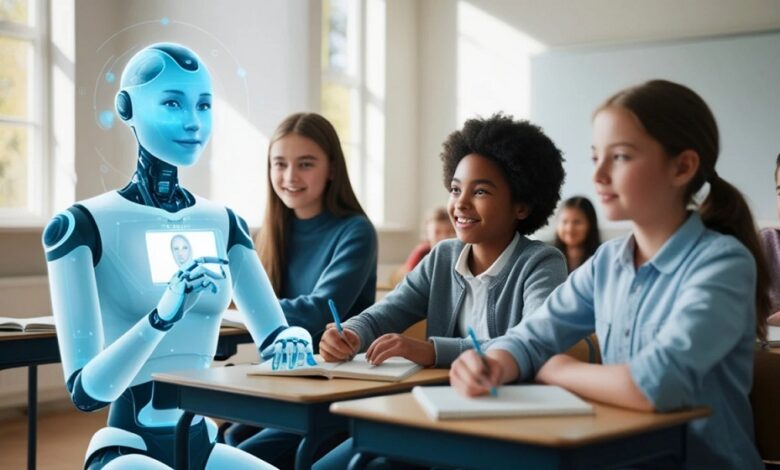
For over a century, the global education system has operated primarily on a factory model. In this traditional framework, a single instructor delivers a uniform curriculum to a diverse classroom of students, expecting everyone to absorb the material at the exact same pace and through the exact same medium. This one-size-fits-all methodology inevitably creates systemic inequities. Students who grasp concepts quickly become disengaged and bored, while those who require additional time or alternative explanations are left behind, accumulating persistent learning gaps that hinder their future academic development.
The rapid integration of artificial intelligence into modern educational technology is fundamentally dismantling this rigid paradigm. By shifting the educational landscape from a static model to a dynamic ecosystem, machine learning algorithms allow for personalization at a scale previously considered impossible. Artificial intelligence acts as a tireless, deeply analytical digital tutor, customizing the delivery, pace, and style of instruction to match the unique cognitive blueprint of every individual learner.
Understanding the Mechanics of Intelligent Personalization
True personalization involves far more than simply digitalizing worksheets or allowing students to click through a pre-recorded video presentation at their own speed. Advanced educational platforms leverage sophisticated machine learning algorithms to continuously analyze data points generated by student interactions.
Every time a student answers a question, pauses on a reading passage, requests a hint, or repeats a mistake, the software builds an intricate, evolving profile of their current knowledge state and learning behaviors.
This technical framework relies heavily on three core mechanisms:
-
Continuous Formative Assessment: Instead of relying strictly on high-stakes, end-of-unit exams to gauge comprehension, the system evaluates the student’s mastery in real-time with every input they provide.
-
Dynamic Predictive Modeling: The algorithm compares an individual student’s performance data against millions of historical learning paths to predict which instructional intervention, question type, or explanation will yield the highest probability of conceptual mastery.
-
Micro-Granular Content Scaffolding: Complex subjects are broken down into tiny, interconnected modular skills, allowing the platform to adjust the building blocks of a lesson instantaneously based on immediate performance metrics.
Key Domains Where AI Drives Educational Customization
1. Adaptive Learning Velocities
In a traditional lecture hall or classroom, the clock is fixed, and the depth of student understanding varies. Artificial intelligence reverses this dynamic, making the target level of understanding fixed while allowing the time required to reach that goal to remain variable. If a student struggles with a specific algebraic concept, the platform automatically halts vertical progression, routing the learner through supplementary explanations, foundational practice problems, and alternative visual representations until mastery is demonstrated. Conversely, when a student displays immediate proficiency, the system accelerates them past redundant reviews directly into more advanced, cognitively challenging assignments.
2. Tailored Multimodal Delivery
Human beings process information differently depending on their cognitive profiles and contextual needs. Some students thrive when presented with dense textual analysis, others require interactive visual simulations, and many learn best through conversational problem-solving. Modern digital environments utilize generative models to transform standard curricula into multiple formats on demand. A lesson on planetary motion can be dynamically adjusted from an essay format into an interactive graphing exercise, a step-by-step mathematical breakdown, or a conversational question-and-answer dialogue, depending entirely on what resonates most effectively with the individual user.
3. Precision Targeted Feedback Mechanisms
Traditional grading systems present a significant temporal delay. A student submits a physics assignment on a Monday, receives a graded paper with red ink on a Friday, and by that time, their cognitive focus has shifted entirely, rendering the teacher’s comments far less impactful. Digital systems provide immediate, microscopic diagnostics at the exact moment a mistake occurs. Instead of merely telling the student their answer is incorrect, the engine analyzes the specific operational steps the student took, identifies the exact conceptual misunderstanding, and delivers a targeted hint that prompts the student to self-correct their logic immediately.
4. Maximizing Accessibility for Diverse Learners
Personalization is particularly powerful for students navigating physical, developmental, or linguistic challenges. Advanced accessibility software leverages natural language processing to provide real-time, highly accurate speech-to-text and text-to-speech translations, instantly opening up complex learning materials to students with visual or auditory impairments. Furthermore, for non-native English speakers, these platforms can adjust the linguistic complexity of instructions without watering down the underlying academic rigor of the subject matter, ensuring that language barriers do not translate into academic deficits.
Elevating the Human Element in the Classroom
A common misconception is that the widespread adoption of digital systems will eventually replace human educators, leading to cold, isolated learning environments. In reality, the strategic implementation of these technologies serves to deeply humanize the classroom ecosystem by liberating teachers from the burdens of administrative routine.
In a standard school day, instructors dedicate hours to grading repetitive assignments, managing attendance logs, and drafting basic lesson plans, leaving minimal time for deep, meaningful student interaction. When automated platforms absorb the tasks of routine evaluation and basic skill drilling, teachers gain immediate access to comprehensive diagnostic dashboards.
These dashboards highlight exactly which students are stalling, where their specific conceptual gaps lie, and who requires immediate human intervention. Armed with this granular data, educators can step out of the role of the generic lecturer and step into the much more impactful role of an academic mentor, conducting targeted small-group workshops, driving philosophical debates, and providing essential emotional support to students navigating complex challenges.
Navigating the Ethical Safeguards of Digital Classrooms
As educational institutions embed automated platforms deeper into their core infrastructure, maintaining strict ethical oversight becomes an absolute imperative. School districts, policymakers, and software developers must work in close alignment to protect student data privacy, ensuring that comprehensive behavioral metrics are never monetized or exposed to external commercial entities.
Furthermore, engineers must constantly audit algorithms to eliminate structural bias, ensuring that predictive models do not inadvertently route students from historically marginalized backgrounds into lower-tier academic tracks based on skewed historical data models. Equity must remain the central design principle, ensuring that advanced personalization tools are distributed equally to underfunded public schools rather than remaining exclusive privileges for affluent private institutions.
The Long-Term Educational Outlook
The ultimate goal of personalizing education through advanced digital platforms is to cultivate independent, self-directed learners who possess an enduring passion for discovery. By matching the structural delivery of knowledge to the individual needs of the human brain, society can systematically eradicate the academic anxiety, disengagement, and artificial ceilings that the legacy factory model has inflicted on students for generations. Moving forward, the classroom will no longer be a place where students sit passively in uniform rows, but an active launchpad where every individual path is meticulously designed to optimize their unique human potential.
Frequently Asked Questions
How do adaptive platforms prevent students from gaming the system by guessing randomly?
Modern learning platforms implement clear guardrails against random guessing and trial-and-error behaviors. The algorithms measure response latency, tracking the exact number of seconds a student spends reading a question before submitting an answer. If the system detects a pattern of rapid, erratic inputs, it flags the behavior as disengaged guessing. The platform will temporarily lock the input field, prompt the student to review a specific foundational concept, or require them to explain their logic before allowing them to advance further.
Can personalized learning tools inadvertently limit a student’s ability to collaborate with their peers?
If implemented poorly, an over-reliance on individual digital interfaces can lead to social isolation. However, in modern blended-learning classrooms, personalization tools are utilized to enhance collaboration rather than replace it. Instructors use the data collected by the software to group students dynamically based on their complementary skill levels. For example, a teacher can intentionally pair a student who has mastered the theoretical side of a concept with a peer who excels at practical application, fostering rich peer-to-peer tutoring opportunities.
How does the implementation of automated customization impact standard grading systems?
The shift toward personalization requires a transition away from traditional competitive grading matrices toward mastery-based grading frameworks. Instead of measuring how well a student performs relative to their peers within a arbitrary timeframe, the focus shifts to whether the student eventually achieves full competency in the required standards. The grade reflects true mastery of the skill, removing the punitive element of time and encouraging students to treat failure as a natural, iterative part of the mastery loop.
What is the ideal age or grade level to introduce personalized software systems?
While foundational aspects of adaptive media can be introduced in early childhood education through gamified literacy and numeracy apps, the full execution of self-directed personalized learning platforms is highly effective starting in upper elementary and middle school. At this stage, students have developed the basic motor skills, attention spans, and reading comprehension levels necessary to navigate digital dashboards independently, allowing the software to effectively train their metacognitive and self-regulation skills.
How do these systems maintain student motivation when the material becomes difficult?
Advanced platforms integrate principles of behavioral psychology to sustain high levels of intrinsic and extrinsic motivation. When a student enters a challenging academic zone, the system breaks the large obstacle down into small milestones, rewarding incremental progress with positive visual feedback, digital badges, and clear progress bars. More importantly, by ensuring that the difficulty level remains precisely at the edge of the student’s current capability, the software keeps the user in a state of optimal cognitive engagement, preventing both the anxiety of excessive difficulty and the boredom of excessive simplicity.
How can rural or underfunded schools with limited internet access benefit from personalization?
To bridge the digital divide, leading educational developers are prioritizing the creation of lightweight, offline-first software applications. These platforms require minimal bandwidth to download core operational frameworks and can run locally on low-cost hardware devices without a continuous internet connection. The system stores the student’s interaction metrics and performance data locally on the device, syncing with central cloud databases briefly only when the device reconnects to a local network at a school or community center.